Why Can Magic Mushroom Potency Vary So Much? Understanding Genetics, Biology, and Chemical Differences
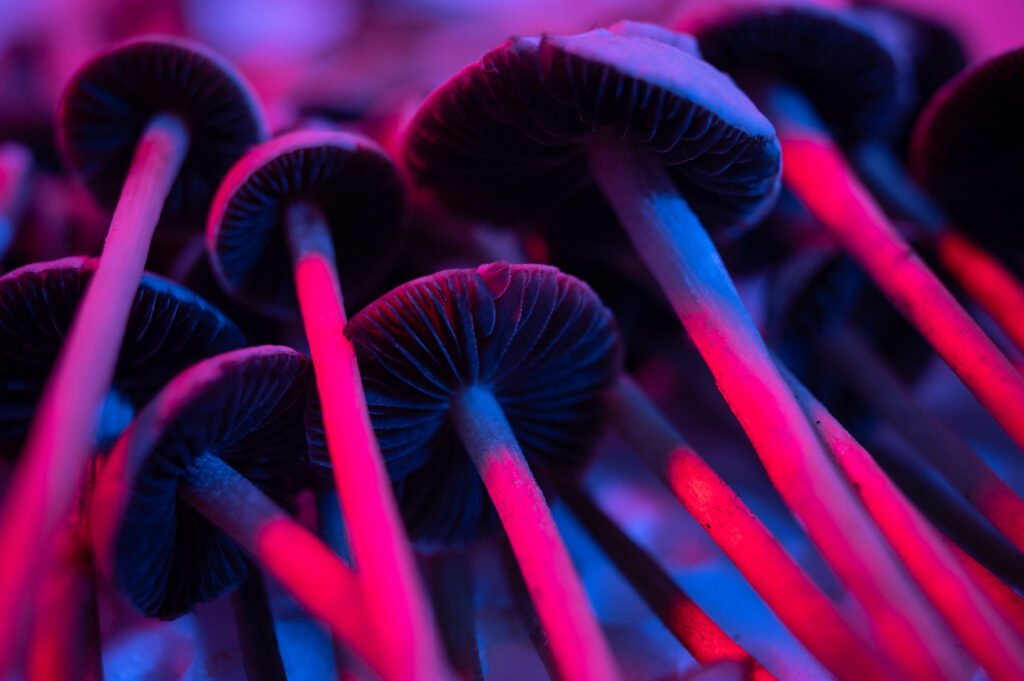
When discussing magic mushrooms, one question frequently comes up: why can two mushrooms appear similar, carry the same strain name, yet have noticeably different levels of potency?
It is a reasonable question, particularly for people who have become interested in mushroom biology, the differences between recognised strains, and the science behind psilocybin.
The answer is more complex than simply identifying a mushroom by its name or appearance. Potency is influenced by several interacting characteristics, including genetics, biological development, environmental conditions, chemical composition, harvesting, handling and storage.
There is also an important distinction between the amount of psychoactive compounds found in a mushroom and the intensity someone reports experiencing. These are related subjects, but they are not interchangeable.
Understanding these differences helps explain why mushroom potency cannot be judged reliably by reputation, appearance or somebody else’s experience.
1. What Does Mushroom Potency Actually Mean?
When people describe a mushroom as potent, they are generally referring to the concentration of psychoactive compounds it contains, particularly psilocybin and psilocin.
These are two closely related compounds, but they are not identical.
Psilocybin is converted in the human body into psilocin, which interacts with serotonin receptors, particularly the 5-HT2A receptor. This interaction is central to the psychedelic effects associated with psilocybin.
From a scientific perspective, potency is therefore more than a subjective description. It can be investigated by measuring the chemical composition of a mushroom sample.
However, people also use the word potency when describing how intense an experience feels. This introduces another layer of complexity: chemical concentration can be measured, while subjective intensity depends on several individual and contextual factors.
It is important not to confuse the two.
2. Genetics: The Biological Foundation of a Mushroom’s Chemical Profile
One of the first things worth understanding is the role of genetics.
Just as genetic differences contribute to the characteristics of other living organisms, the genetic background of a mushroom can influence its biological and biochemical properties.
Different mushroom lineages may have different capacities for producing psilocybin and related tryptamine compounds. This is one reason researchers are interested in comparing the chemical profiles of different Psilocybe species and recognised strains.
However, there is an important distinction between a genetic tendency and a guaranteed chemical result.
A strain may have a recognised reputation or a characteristic chemical profile in particular studies, but that does not mean every individual mushroom carrying that name will contain identical concentrations.
Genetics provides part of the biological foundation. It does not operate independently of the organism’s development and environment.
In other words, a strain’s genetic identity can matter without serving as a permanent potency certificate.
3. Why Strain Names Do Not Guarantee Potency
Mushroom names can have interesting histories.
Some names are associated with geographical origins, people who discovered or popularised particular varieties, recognised lineages, or other historical and biological associations.
Over time, certain names have also developed reputations within mushroom communities.
However, a name and a laboratory measurement are two different things.
For example, a mushroom may be widely described online as particularly potent. That reputation may come from personal experiences, historical reports or testing of particular samples.
But it does not establish that every mushroom carrying that name will have the same chemical composition.
There is another complication: many familiar mushroom strain names are informal community labels rather than formally standardised scientific classifications. The identity and genetic relationships behind some labels may not be independently established.
This is why comparisons between popular names should be treated carefully.
A recognised strain name can provide historical or biological context, but it cannot replace verified chemical analysis.
4. Growing Conditions and Biological Development
Genetics is important, but mushrooms are living organisms. Their biological characteristics develop within an environment.
Environmental conditions can influence fungal growth, development and metabolism. Consequently, differences in growing environments may contribute to differences in the chemical composition of mushroom samples.
Even when mushrooms share a recognised genetic background, they are not necessarily guaranteed to develop identical chemical profiles.
This is an important area of ongoing scientific interest.
Researchers distinguish between two types of variation:
Inter-strain variation: Differences in chemical composition between different recognised strains.
Intra-strain variation: Differences between individual mushrooms carrying the same strain designation.
Both matter when discussing potency.
A particularly useful 2026 research study examined 14 Psilocybe cubensis strains under standardised laboratory conditions. Despite the researchers using consistent conditions for cultivation and analysis, they observed substantial differences in total tryptamine concentrations between strains.
They also identified meaningful differences between individual fruiting bodies within the same strains.
This finding demonstrates something important: variation is not simply a result of different environments or inconsistent handling. Biological differences can remain even when researchers attempt to standardise the conditions.
The study also highlights why it is difficult to assign one universal potency value to an entire strain.
5. Harvesting, Handling and Storage: Why the Mushroom’s Journey Matters
Another important part of the discussion is what happens after a mushroom has developed.
A mushroom’s chemical composition does not necessarily remain unchanged throughout its entire lifecycle and subsequent storage.
Post-harvest handling and preservation can influence chemical stability. Factors such as exposure to light, heat, oxygen and moisture are relevant when considering the preservation of psilocybin and psilocin.
Research examining preserved Psilocybe specimens has identified differences in the stability and detectability of these compounds under different preservation histories.
This means that two samples originally having similar chemical compositions may not necessarily retain identical profiles after different periods or conditions of storage.
It is also important to distinguish between preserving existing compounds and increasing potency. Appropriate preservation may help limit chemical degradation, but it does not automatically increase the original concentration of psilocybin.
The wider lesson is that potency discussions should consider the mushroom’s biological development and its post-harvest history, rather than focusing exclusively on its original strain identity.
6. Laboratory Testing: The Strongest Evidence of Chemical Potency
If appearance, reputation and personal experiences cannot reliably establish potency, what can?
This is where laboratory analysis becomes important.
Scientific methods such as high-performance liquid chromatography (HPLC) and liquid chromatography coupled with tandem mass spectrometry (LC-MS/MS) allow researchers to identify and quantify compounds within a sample.
These methods can help determine:
The concentration of psilocybin.
The concentration of psilocin.
Differences in chemical composition between samples.
The presence and relative quantities of other detectable compounds, depending on the analytical method.
A 2024 study published in Analytica Chimica Acta investigated an LC-MS/MS method for measuring psilocybin and psilocin in different Psilocybe cubensis strains.
The researchers analysed individual mushrooms and compared their results with an independent laboratory. Their findings demonstrated measurable differences in chemical concentrations between the tested samples.
This is an important development because it shows how scientific analysis can move potency discussions beyond assumptions and community reputation.
However, laboratory testing has limitations that should not be ignored.
A laboratory result describes the sample that was actually tested.
It does not automatically establish the chemical composition of every mushroom carrying the same name, nor does a single sample necessarily represent the entire biological population of a strain.
Sampling also matters. Testing one individual mushroom is not necessarily equivalent to testing a representative, homogenised sample containing material from multiple mushrooms.
For this reason, understanding a strain’s broader chemical profile requires appropriately designed research, representative sampling and reliable analytical methods.
Laboratory testing is essential evidence, but interpreting its results requires scientific context.
7. Chemical Potency Versus Reported Human Experience
This is another area where misunderstandings frequently occur.
Two people can encounter samples with similar measured chemical concentrations and still describe their experiences differently.
Why?
Because the human response to psilocybin is not determined by chemical concentration alone.
Individual biology, metabolism, psychological state, expectations, surroundings and other substances or medications can all influence how someone responds.
There are also differences in individual sensitivity and how people process psychoactive compounds.
Consequently, a stronger reported experience does not automatically prove that the mushroom contained more psilocybin.
Likewise, two people reporting different experiences does not necessarily mean the samples had different chemical concentrations.
This is why laboratory measurements and personal accounts should be understood as different forms of information.
Laboratory testing helps establish what was present in the tested material. Human reports describe how particular individuals experienced it.
Neither should be mistaken for the other.

8. Are Popular Strain Potency Rankings Reliable?
Comparisons such as one popular strain being stronger than another are common in mushroom discussions.
These comparisons can be useful as general references, particularly when they are supported by documented research.
However, they can also create unrealistic expectations when people treat them as universal scientific facts.
Consider a familiar comparison between Penis Envy and Golden Teacher.
People may encounter strong claims about the relative potency of these varieties. But a general reputation does not establish that every Penis Envy sample will contain more psilocybin than every Golden Teacher sample.
The same principle applies to other popular strain comparisons.
A scientific comparison needs clearly identified samples, reliable analytical methods, appropriate measurements and enough representative data to support the conclusion.
Without that evidence, a ranking may reflect community experience, limited testing or repeated claims rather than a reliable measurement of an entire strain.
It is reasonable to be interested in these comparisons. It is less reasonable to treat them as guarantees.
9. Stronger Does Not Automatically Mean Better
Perhaps one of the most important misconceptions surrounding mushroom potency is the assumption that stronger automatically means better.
That is not a scientifically sound way to evaluate a mushroom.
Chemical potency describes the concentration of particular compounds. It does not independently establish overall quality, safety, consistency or suitability.
A higher concentration does not automatically mean a better biological profile.
Similarly, a popular strain is not automatically superior simply because it has developed a strong reputation.
When evaluating scientific information about mushrooms, it is worth keeping separate concepts separate:
Potency: The measured concentration of relevant chemical compounds.
Consistency: How similar the chemical composition is across different samples.
Identity: The biological and genetic characteristics associated with the organism.
Safety: The presence or absence of relevant hazards and the broader risks associated with exposure.
Subjective response: How an individual reports experiencing the substance.
These characteristics are related, but they do not mean the same thing.
A proper understanding of mushroom biology requires looking beyond one measurement or one popular name.
10. What Should Readers Take Away From Mushroom Potency Research?
The most useful approach is to remain curious while being critical of claims that sound more certain than the evidence allows.
A few principles are particularly important:
Do not judge a mushroom by its name. A strain label can provide context, but it does not establish a guaranteed chemical profile.
Do not judge it by appearance. Visual characteristics alone cannot reliably reveal the concentration of psilocybin or psilocin.
Do not rely entirely on reputation. Community discussions and personal experiences can be interesting, but they are not substitutes for scientific evidence.
Understand laboratory results. Testing provides valuable information about the sample analysed, but results should not automatically be generalised to every mushroom carrying the same strain name.
Recognise biological variation. Genetics, development and environmental influences all contribute to the complex characteristics of living organisms.
Remember that human experiences differ. An individual’s reported experience cannot independently establish the chemical potency of a sample.
There is still much to learn about the relationships between mushroom genetics, chemical composition and environmental influences. Continued research and better standardisation will help scientists understand these relationships more accurately.
Final Thoughts
Why does magic mushroom potency vary so much?
There is no single answer.
It is a combination of biological identity, genetics, development, environmental influences, chemical composition and what happens to the mushroom after it has developed.
A strain may have a recognised reputation, but that reputation does not guarantee identical chemical concentrations across every individual mushroom or sample.
Laboratory testing provides important scientific evidence, while human experiences offer a different perspective on individual responses. Both can contribute to understanding the subject, provided their limitations are recognised.
Ultimately, the most important lesson is simple: never judge a mushroom by its name, reputation or appearance alone.
Learn about the biology, examine the scientific evidence, understand what laboratory results actually represent, and remain cautious about claims that have not been properly established.
The more we understand the science behind mushroom potency, the less we need to rely on assumptions.